

The superpowers of walking
We often do it without a second thought, yet walking harbors incredible benefits for our well-being, health, and even how long we live.
Engaging in regular walks actively contributes to a longer life and significantly lowers the risk of cardiovascular diseases, cancer, and depression.
Discover why this seemingly simple activity is as potent as medicine and learn practical ways to reach the recommended 10,000 steps daily.
And see the results of our exclusive study, ranking American cities and states by their activity levels

Walking: A powerful accelerator of health and longevity¹
Walking significantly reduces the risk of all-cause mortality by up to 60% and lowers the incidence of cancer and cardiovascular diseases by up to 51%². This simple act enables the body to function optimally, improving health on multiple levels by strengthening the heart and respiratory systems, reducing abdominal fat, and optimizing metabolism, the nervous system, and the immune system.
Transform your health:
Body, heart, and mind benefits

Engaging in regular walks has a significant positive impact on stress levels and mental well-being. The increased oxygen flow to organs, particularly the brain, fosters better concentration and strong cognitive performance. Furthermore, walking triggers the release of endorphins, the body's feel-good hormones, effectively reducing stress and lowering the occurrence of depression by as much as 42%³. As an added benefit, it contributes to a greater sense of well-being by promoting more restful sleep.
Walking considerably improves overall cardiovascular health and is now recognized by cardiologists as a valuable non-pharmacological approach to prevent hypertension, stroke, or heart attack. For individuals with confirmed hypertension, consistent daily walking actively helps lower blood pressure by at least 4 mmHg (normal blood pressure is typically around 120/80 mmHg)⁴.
These positive effects are now well established. Active walking increases heart rate, improving circulation and promoting better elasticity of the arteries. This, in turn, is linked to a significant reduction in cholesterol⁵. Additionally, by strengthening muscles and increasing energy expenditure, walking contributes to a reduction in abdominal fat and a more efficient metabolism.
Unlock the benefits: Four tips to achieve 10,000 steps daily
Did you know that walking 10,000 steps a day is linked to a 50% lower risk of dying from cardiovascular disease compared to taking only 2,000 steps?
To help you achieve this optimal level of daily activity, we’ve identified four key elements.
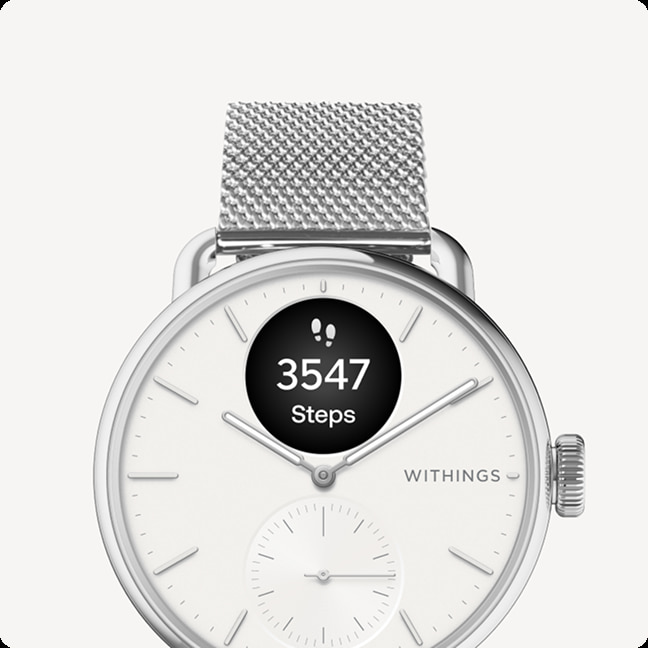
Track your progress
The most effective and motivating approach is to count your steps using an activity tracker such as the ScanWatch. This also helps you optimize your step frequency to at least 60 steps per minute.

Step up the fun
Share your goals with friends and family and challenge them using the Withings app leaderboard.
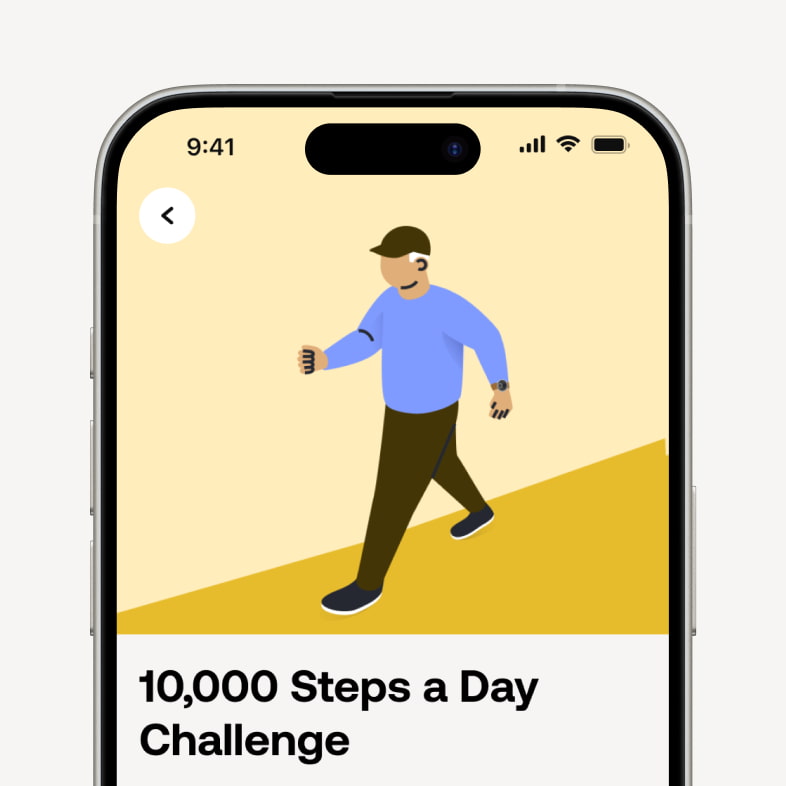
Increase your steps each week
The Withings app's "10,000 Steps Challenge" provides a structured and achievable plan to gradually boost your physical activity levels.
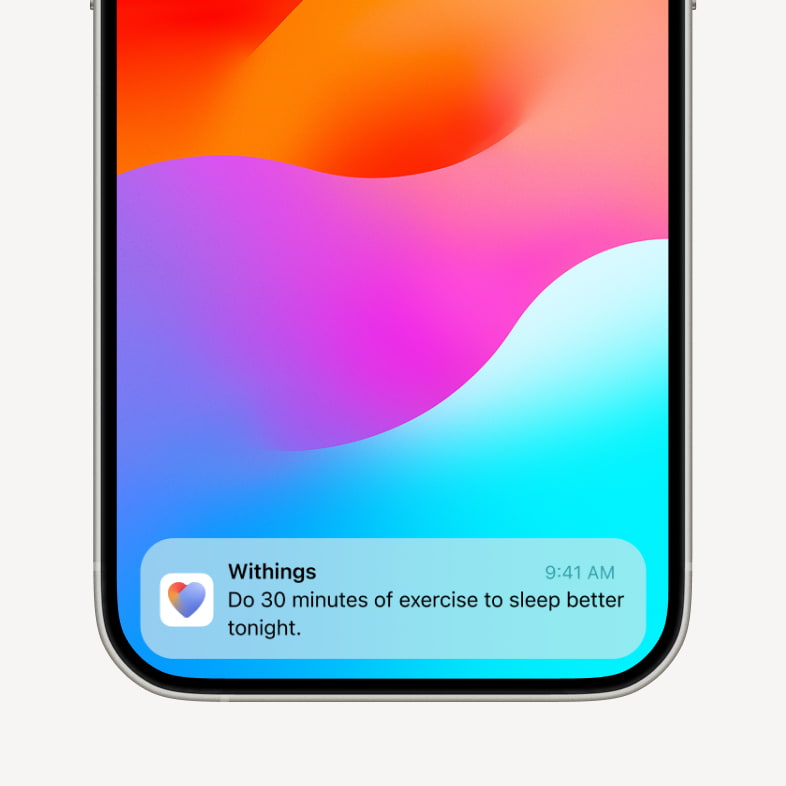
Schedule movement reminders
Use your ScanWatch or the Withings app to set reminders. It can be your personal movement coach, reminding you to get up and move every two hours.

1 Lee, I-Min et al., Effect of physical inactivity on major non-communicable diseases worldwide: an analysis of burden of disease and life expectancy, The Lancet, Volume 380, Issue 9838, 219 - 229
2 Stens, N, Bakker, E, Mañas, A. et al. Relationship of Daily Step Counts to All-Cause Mortality and Cardiovascular Events. JACC. 2023 Oct, 82 (15) 1483–1494.
3 Bizzozero-Peroni B, Díaz-Goñi V, Jiménez-López E, et al. Daily Step Count and Depression in Adults: A Systematic Review and Meta-Analysis. JAMA Netw Open. 2024;7(12):e2451208. doi:10.1001/jamanetworkopen.2024.51208
4 Pescatello LS, Buchner DM, Jakicic JM, Powell KE, Kraus WE, Bloodgood B, Campbell WW, Dietz S, Dipietro L, George SM, et al; 2018 Physical Activity Guidelines Advisory Committee. Physical activity to prevent and treat hypertension: a systematic review. Med Sci Sports Exerc. 2019;51:1314–1323.
5 Daily steps and all-cause mortality: a meta-analysis of 15 international cohorts Paluch, Amanda E et al.The Lancet Public Health, Volume 7, Issue 3, e219 - e228