Turning Challenges into Opportunities: Pr.
Articles
Last edit: January 13, 2026
December 9, 2024
This article is based on our November 1, 2024 interview with Pr. Solomon Tesfaye.
When Solomon Tesfaye was a 16-year-old boy in Addis Ababa, Ethiopia, a military regime closed his school and forced the students into national service. Tesfaye, who had by then developed a true passion for learning, desperately hoped to continue his intellectual development and academic journey.
On the urging of his brother, he took a chance and applied for an international scholarship to the prestigious Sevenoaks School in Kent, England. Sevenoaks, a storied boarding school founded in 1432, may have seemed like an unlikely next home for Tesfaye. But they also decided to take a chance on him. Those bets ultimately paid off.
Pr. Tesfaye is now a globally recognized diabetes expert at the University of Sheffield whose research has played a significant role in understanding diabetic nerve damage, how to identify it earlier, and how to potentially treat it before the complications become debilitating. In September, Pr. Tesfaye was honored with a Lifetime Achievement Award at the 34th NeuroDiab annual meeting in recognition of his pioneering research in the field. Tesfaye credits his experience at Sevenoaks School as having kindled his interest in science and his enduring passion for grappling with difficult problems, like diabetic peripheral neuropathies (DPN).
Fast forward to today and Pr. Tesfaye is leading some of the most exciting work on early diagnosis of DPN and clinical strategies for altering its relentless progression. His team at University of Sheffield recently presented findings at The American Diabetes Association Scientific Sessions that found the use of point-of-care testing devices by clinicians (Withings’ Sudoscan in combination with DPNCheck) could significantly improve the detection of DPN over current standard of care methods and provide a rapid, reproducible, and quantitative assessment for busy clinicians.
“For diabetic retinopathy, we’ve been successful using technology to improve diagnosis and care,” said Tesfaye. “But for neuropathy, we’re using these Stone Age implements. With a monofilament, even the best doctors cannot diagnose neuropathy the same two days in a row. Meanwhile, fifty percent (of patients) die within 5 years, it costs more than breast or colon cancer, and is devastating because it’s so painful patients can’t sleep. Sadly, advanced neuropathy is the strongest risk factor for diabetic foot ulceration that results in fifty percent mortality within 5 years, and costs more than breast, colon and prostate cancers, combined. Neuropathy also is devastating as it can also cause distressing foot and leg pain that interferes with sleep.”
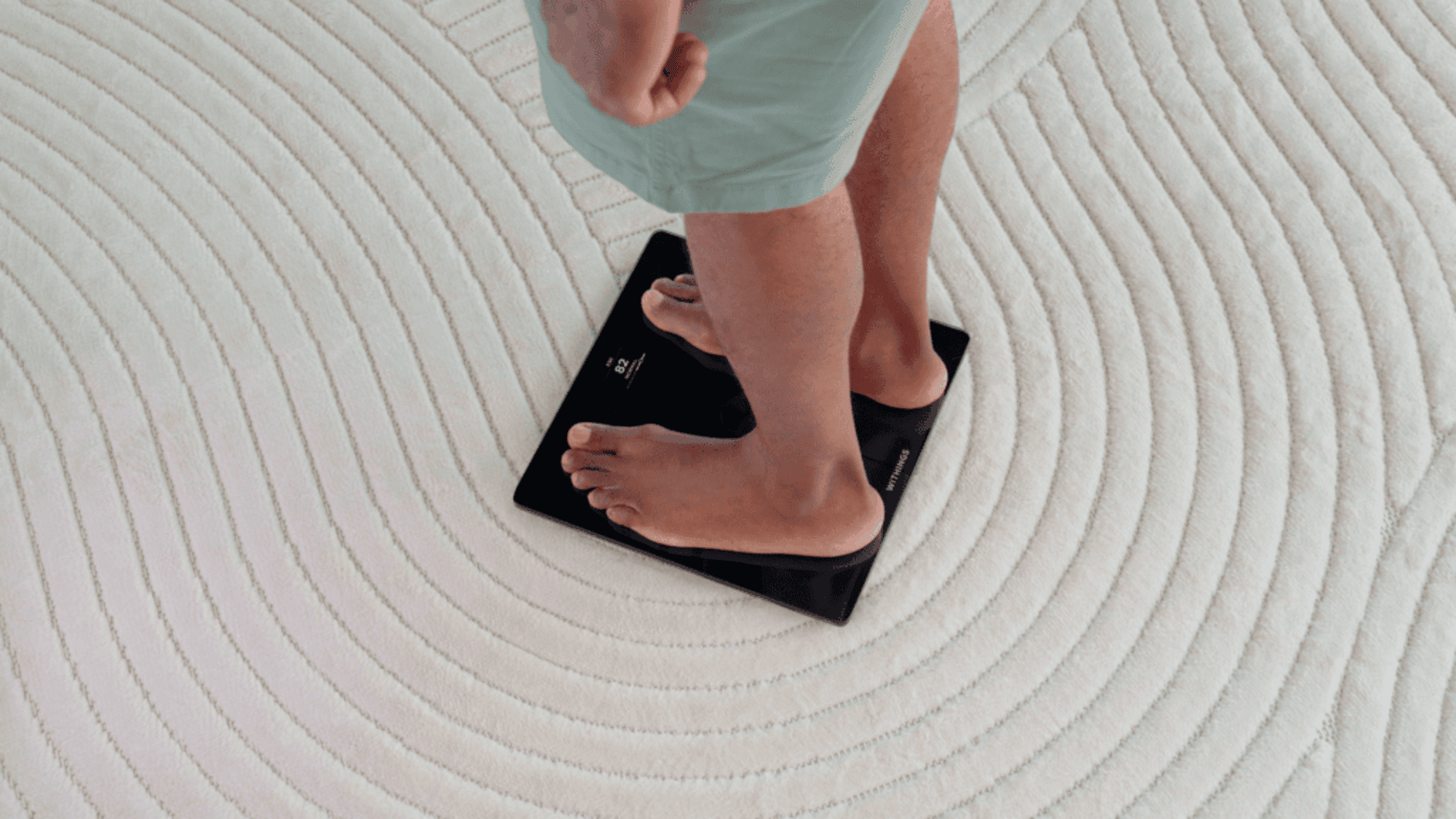
Tesfaye is now immersed in a major new study with 160 participants – called OCEANIC – that seeks to determine whether early diagnosis, coupled with robust, early intervention can alter the course of DPN for the better. OCEANIC is using Withings Body Pro 2 smart scales with Electrochemical Skin Conductance (ESC) technology, wearable sensors, and activity trackers, to monitor and share patient progress on metrics including body fat, muscle mass, and ESC score, with the aim of reinforcing lifestyle changes. The study group will receive personalized diabetes education and exercise programs, and weight loss interventions including GLP-1s, to significantly reduce HbA1C.
“Our goal is to explore whether these intensive strategies to manage risk factors can halt or even reverse diabetes-related nerve damage when it is identified at an early stage,” said Pr. Tesfaye. “We want to do for neuropathy what early and routine screening has done for retinopathy – bringing better outcomes to millions of people with diabetes.”
If Solomon Tesfaye’s history is any guide, achieving clear answers to the big questions in the OCEANIC study will be but a waypoint on his journey. He credits a mentor, the late Professor John Ward, with encouraging him to tackle the most meaningful problems. “He told me not to worry about publishing too many studies, but rather focus on a few big questions that will fundamentally change people’s lives.”
Interested in partnering with us?