Withings Remote Patient Monitoring Program – An Outcomes Analysis on Hypertension
Articles
Last edit: January 28, 2026
May 20, 2025
This paper aims to analyze the impact of Withings Remote Patient Monitoring (RPM) programs on hypertension and hypertensive crisis management in patients with or at risk of developing hypertension. The study comprises 1,873 patients over 6 months, who followed an RPM program and used Withings Blood Pressure Monitors.
- Introduction
Hypertension, defined by the World Health Organization (WHO) as a blood pressure level of ≥ 140/90 mmHg, is the most prevalent chronic disease globally, affecting approximately 1.28 billion adults aged 30-79 years. If left untreated, hypertension can lead to severe complications, including heart failure, chronic kidney disease, and various heart diseases such as atrial fibrillation, coronary heart disease, and valvular heart disease. Given that hypertension often presents minimal to no symptoms but carries significant health risks, frequent and continuous blood pressure monitoring is crucial for hypertensive patients and those at risk.
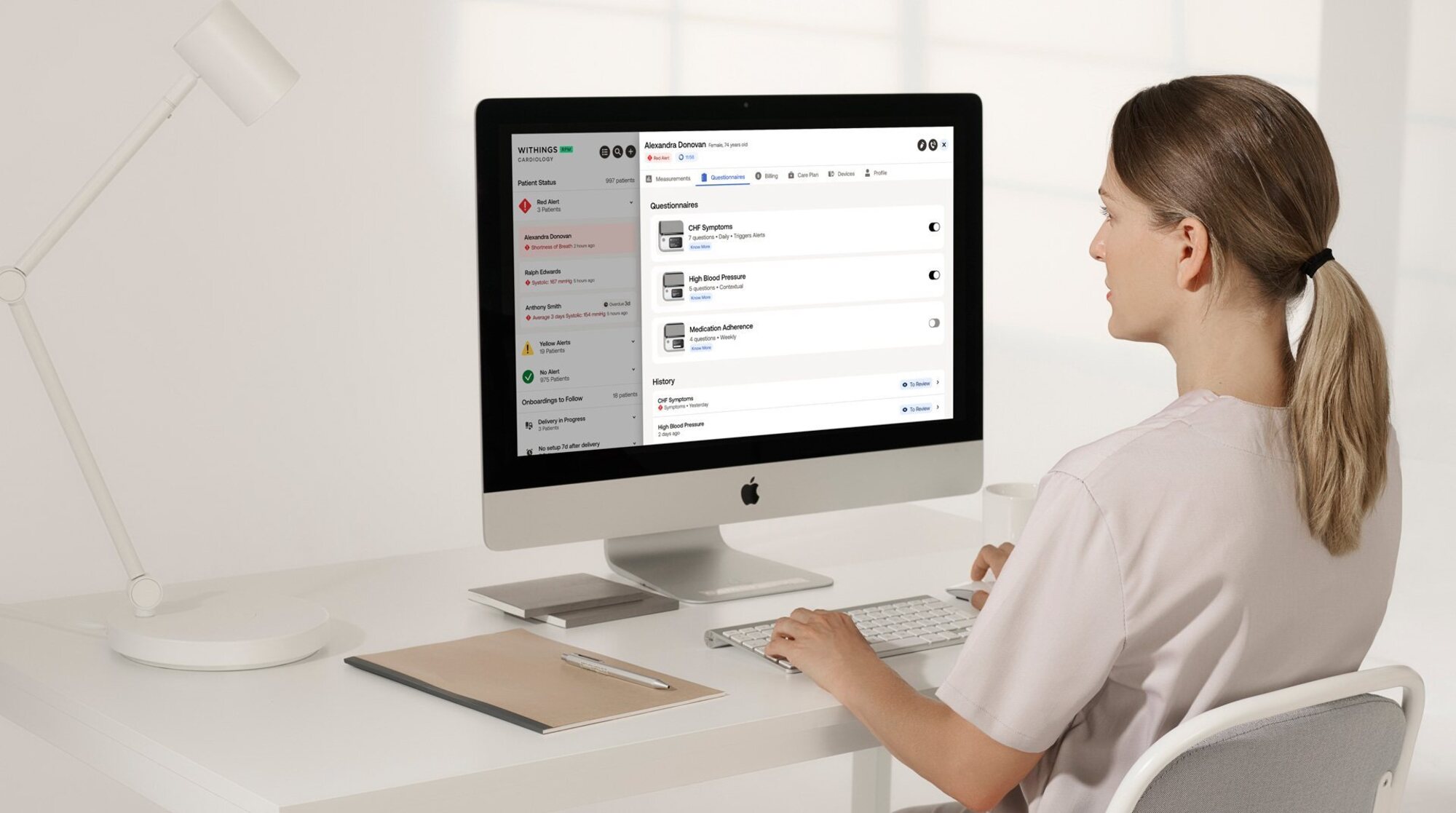
This study examines the challenge of hypertension in the United States, affecting nearly half of the adult population, with a significant portion remaining untreated or non adherent to medication. Withings’ Remote Patient Monitoring (RPM) program offers a solution by enabling healthcare professionals to remotely access patients’ health records and monitor blood pressure readings through Withings Blood Pressure Monitors (BPM Connect or BPM Connect Pro). This facilitates personalized treatment plans and improves medication adherence among hypertensive patients. The study evaluates the effectiveness of Withings RPM programs on managing hypertension, involving 3377 patients across 50 programs, highlighting the potential of remote monitoring in enhancing patient health outcomes.
- Methods
Dataset
The dataset for this study was obtained from Withings, and is composed of all users following an RPM program, and owning at least one of the Withings Blood Pressure Monitors ; this may include patients at risk of or with hypertension, taking medication or attempting to reduce their medication doses. The data set is composed of 1877 users, they are 18 or older, they are in Europe or USA.
Patients included in this study took their in-home BP measurements using the Withings BPM Connect or the BPM Connect Pro devices. They are clinically-validated devices measuring BP and HR using the cuff oscillometric method.
The data exploration was performed using Python v3.9.6. The plots were built using matplotlib, and the statistical analysis performed using statsmodels. Potential covariates, including age, sex and BMI were analyzed, but not accounted for in the study.
Classification according to BP levels
This study separates tension into five distinct categories, following guidelines from the American Heart Association (AHA), as shown in table 1 below.
- Results
User Activity
Descriptive statistics
Figure 1 presents the distribution of users according to the five different hypertensive categories, in the first week of their enrolment in the program. This shows that approximately a third of users (647 users) experience Grade 2 Hypertension in their first week. Grade 3 hypertension, which represents extreme hypertension, represents 12% of the population (225 users). Among this category, 9% (21 users) experience an average hypertension ≥ 180/120 mmHg, which are classified as hypertensive crises, and present a life-threatening risk.
Hypertension Trajectories, based on Initial BP Levels
Figure 2 presents the mean difference in blood pressure at each relative week rank, with respect to week 1, averaged across all users by hypertension category. The graphs indicate a clear reduction in both systolic and diastolic pressures over time for patients with Grade 2 and Grade 3 Hypertension, suggesting effective management or treatment. Patients with Grade 1 Hypertension maintain relatively stable blood pressure levels, indicating controlled hypertension. Conversely, patients with normal and elevated blood pressure categories exhibit slight increases in both systolic and diastolic pressures over time. To understand the implications of this, it would be interesting to collect further information on the patients at hand : were they enrolled in the program to monitor their reduction in medication, or because they were at risk of developing hypertension, for example due to underlying comorbidities ?
Hypertension Trajectories of Blood Pressure, based on Measure Frequency
Further than the initial level of hypertension, it is relevant to investigate whether the frequency and consistency of measures has an impact on blood pressure management. The frequency of measures was based upon quartile information :
- Very Consistent users : More than 5.5 measures a week (Q3)
- Consistent users : Between 3 and 5.5 measures a week (IQR)
- Inconsistent users : Less than 3 measures a week (Q1)
Figure 4 shows the mean difference in blood pressure at each relative week rank with respect to week 1, averaged across all users, by frequency of measures.
Hypertensive Crises Trajectories
As aforementioned, approximately 1% of users experience a mean BP > 180/120 mmHg in their first week of measures (which includes at least three measures). Furthermore, amongst the entire cohort, a total of 673 users (28.6%) experience a hypertensive crisis. This is an abnormally high proportion, compared to indications from several sources, which state that approximately 1% of hypertensive patients experience a hypertensive crisis. It is therefore a major point of interest is to quantify the reduction in the percentage of users experiencing crises over time, as presented in figure 5.
- Conclusion
This study provides a comprehensive analysis of the evolution of hypertension over six months in a cohort of 1,873 patients using the Withings Remote Patient Monitoring (RPM) program, in conjunction with Withings Blood Pressure Monitors. The findings underscore the potential of consistent and continuous self-monitoring on hypertension management. Patients who adhered to the program’s recommendations and consistently took their blood pressure measurements experienced significant reductions in both systolic and diastolic blood pressure levels. This highlights the potential benefits of RPM programs hypertension management, likely due to improving medication adherence and better informed decisions by doctors.
The study also revealed a higher-than-expected prevalence of hypertensive crises among the cohort, suggesting the need for a closer monitoring of hypertensive crises in patients at risk.
Future research should focus on identifying factors that influence patient engagement and motivation, such as the quality of onboarding, the frequency of contact with care teams and the treatment duration. Additionally, collecting more detailed information on patient backgrounds and program features will help to better understand the observed trends and improve the effectiveness of RPM programs.
