"Being able to detect sleep apnea with a non-invasive device at home is a game-changer and could drastically help to better diagnose it."
CE cleared–Europe only 🇪🇺
Sleep Analyzer
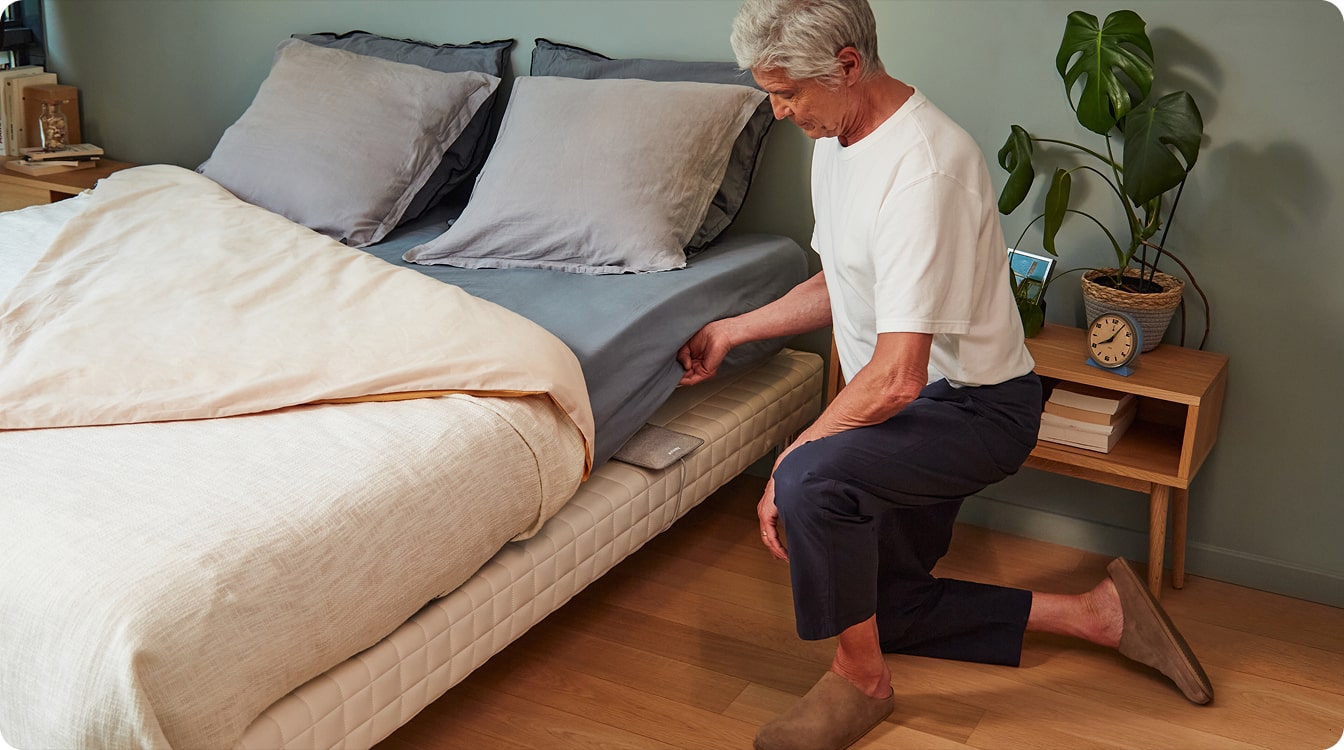
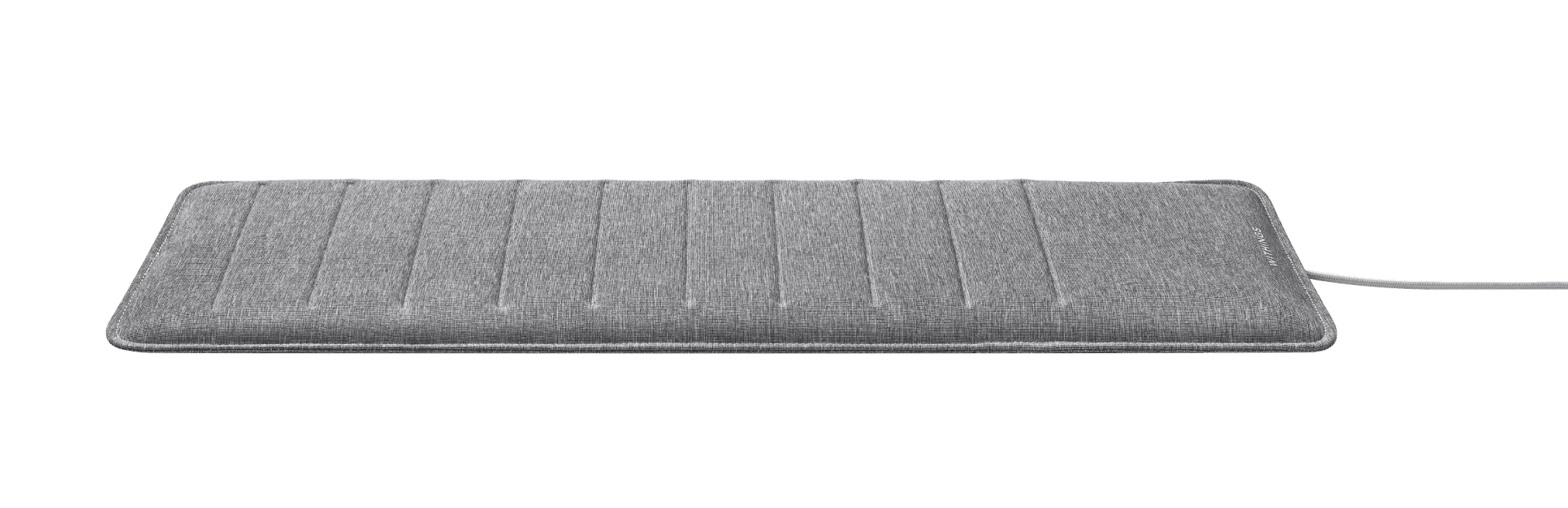
Withings Sleep Analyzer is an unobtrusive mat that requires only a one-time setup under the mattress. It contains the world’s most advanced sensors and technology to analyze sleep and detect sleep apnea, a highly prevalent and underdiagnosed condition.
Transform patient care with clinical-grade sleep apnea detection
World’s first non-invasive sensor to detect sleep apnea
By calculating the Apnea-Hypopnea Index (AHI) from the Sleep’s data, the Sleep Apnea Detector algorithm enables the diagnosis and monitoring of Obstructive Sleep Apnea (OSA) and a fine estimate of its severity.
In-depth sleep analysis
Receive a comprehensive, lab-level breakdown of your participants’ sleep. We provide crucial data on sleep cycles, including the duration of deep, light, and REM sleep, alongside total duration and interruptions. For even richer insight, Sleep uniquely identifies snoring patterns, separating them from environmental noises.
Effortless and unobtrusive
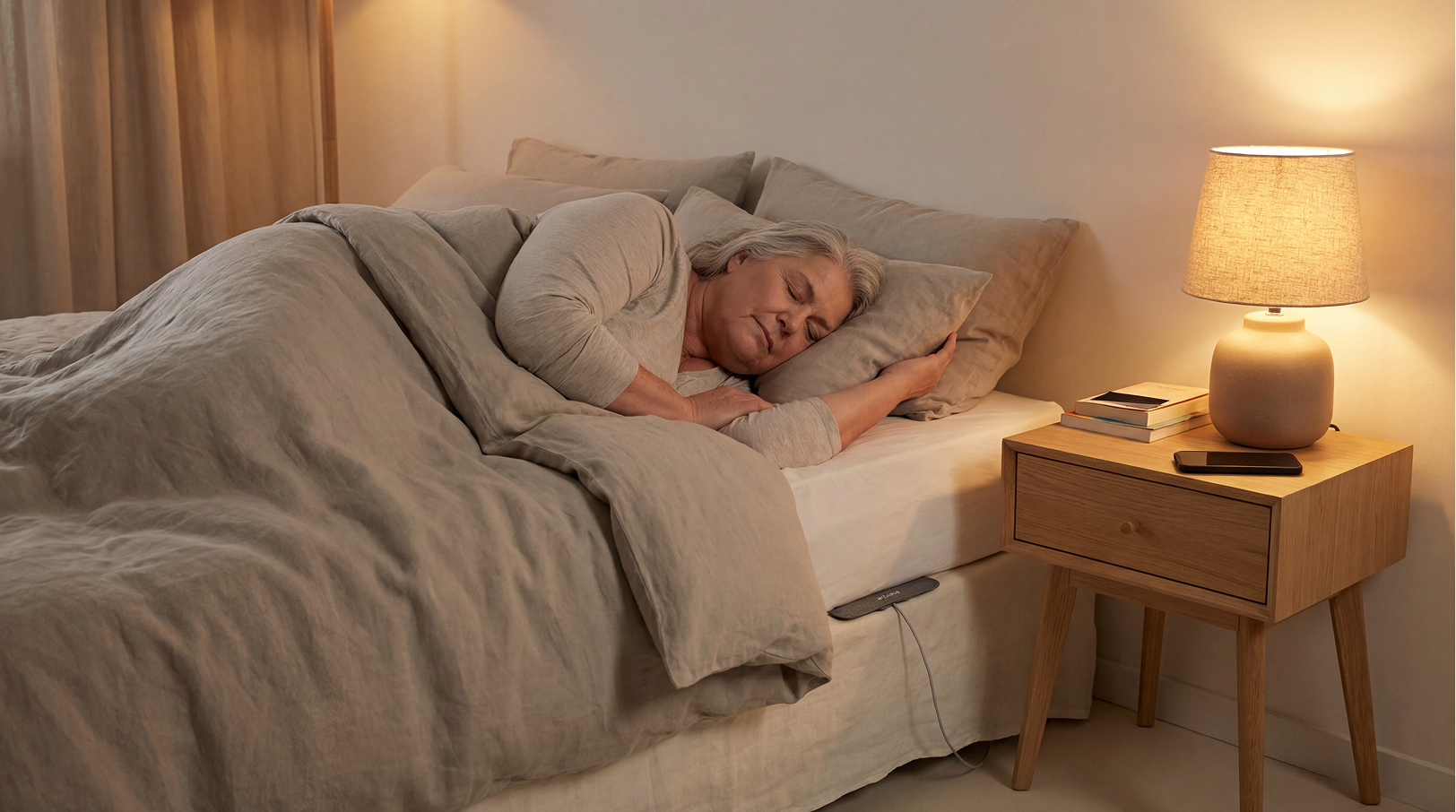
A simple, one-time setup under the participant's mattress provides automatic, continuous tracking with nothing to wear or charge, maximizing long-term patient adherence.
Internal study on Withings database
87% of sleep sensors are still being used after one year.
Features
 Developed with sleep experts
Cellular connectivity via our Data Hub
One-time setup
Long-term user engagement
Compatible with all mattresses*
Developed with sleep experts
Cellular connectivity via our Data Hub
One-time setup
Long-term user engagement
Compatible with all mattresses* *Compatible with spring, foam, latex and memory foam layer mattresses. Tested on mattresses 4 to 15 inches (10 to 40 cm) thick.
Access to consistent and accurate health data has never been easier
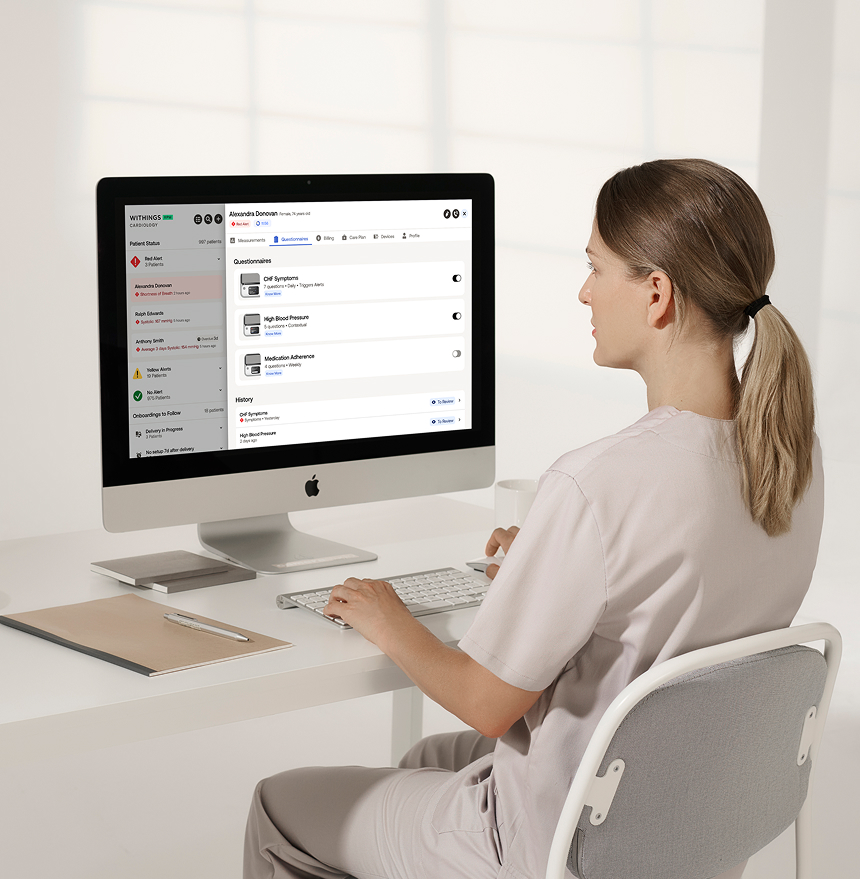
Our remote monitoring platform is an easy tool to keep track of your patient cohort.
Sleep Analyzer seamlessly integrates into Withings RPM to allow you to take your sleep monitoring to the next level. The platform will allow you to retrieve all the sleep data for your cohort of patients.
Deliver the highest quality of care and avoid unnecessary complications.

Learn how partnerships improve health outcomes
Multinight prevalence, variability, and diagnostic misclassification of obstructive sleep apnea
Recent studies suggest that obstructive sleep apnea (OSA) severity can vary markedly from night to night, which may have important implications for diagnosis and management. This study looks at a total of 67,278 individuals aged between 18 and 90 years underwent in-home nightly monitoring over an average of approximately 170 nights per participant using the Withings Sleep Analyzer to examine the variation in OSA severity night to night.
Assessment of sleep patterns in dementia and general population cohorts using passive in-home monitoring technologies
Nocturnal disturbances are a common symptom experienced by people with dementia, and these often present prior to diagnosis. Imperial College London compared sleep data collected from both people with dementia and the general population using the Withings Sleep Analyzer to identify whether differences could be detected.
Related devices
Interested in partnering with Withings Health Solutions?
FAQ
How does Withings Sleep Analyzer detect sleep apnea?
Withings Sleep Analyzer is the world's first non-invasive sensor to detect sleep apnea at home. By calculating the Apnea-Hypopnea Index (AHI) from the device's data, its Sleep Apnea Detector algorithm enables the diagnosis and monitoring of Obstructive Sleep Apnea (OSA) and provides a precise estimate of its severity. This makes it a powerful tool for identifying a condition that is both highly prevalent and severely underdiagnosed.
What sleep biomarkers does Withings Sleep Analyzer track?
Sleep Analyzer delivers a comprehensive, lab-level breakdown of each patient's sleep. Tracked biomarkers include sleep cycles (deep, light, and REM stages), sleep quality (duration, regularity, and interruptions), night heart rate, sleep apnea severity via AHI, snoring episodes and their duration, and an overall Sleep Score developed with sleep physicians to reflect the physiological importance of each metric.
How easy is it for patients to set up and use Withings Sleep Analyzer?
Patient adherence starts with simplicity, and Sleep Analyzer was designed with this in mind. Setup requires placing the mat under the mattress just once, after which tracking happens automatically every night with nothing to wear, charge, or interact with. This completely unobtrusive experience removes all barriers to consistent use, and the results speak for themselves: 87% of sleep sensors are still being used after one year.
How does Withings Sleep Analyzer integrate into remote patient monitoring programs?
Sleep Analyzer integrates seamlessly into RPM programs giving care teams centralized access to all sleep data across their entire patient cohort. This makes it straightforward to monitor trends, flag concerning patterns, and deliver higher quality care at scale without adding complexity to existing workflows.
Has Withings Sleep Analyzer been used in clinical research?
Yes. Sleep Analyzer has been used in several published studies. One large-scale study examined OSA severity variation night to night across 67,278 individuals, highlighting the value of multi-night home monitoring over single-night assessments. Another study by Imperial College London used Sleep Analyzer to compare sleep patterns between people with dementia and the general population, demonstrating its potential as a passive monitoring tool in neurodegenerative disease research.
Is Withings Sleep Analyzer available worldwide?
Sleep Analyzer is CE cleared and available in Europe. Healthcare organizations in the US can purchase Withings Sleep Rx.
